Celebrating St. Lucy's Day in Your Home
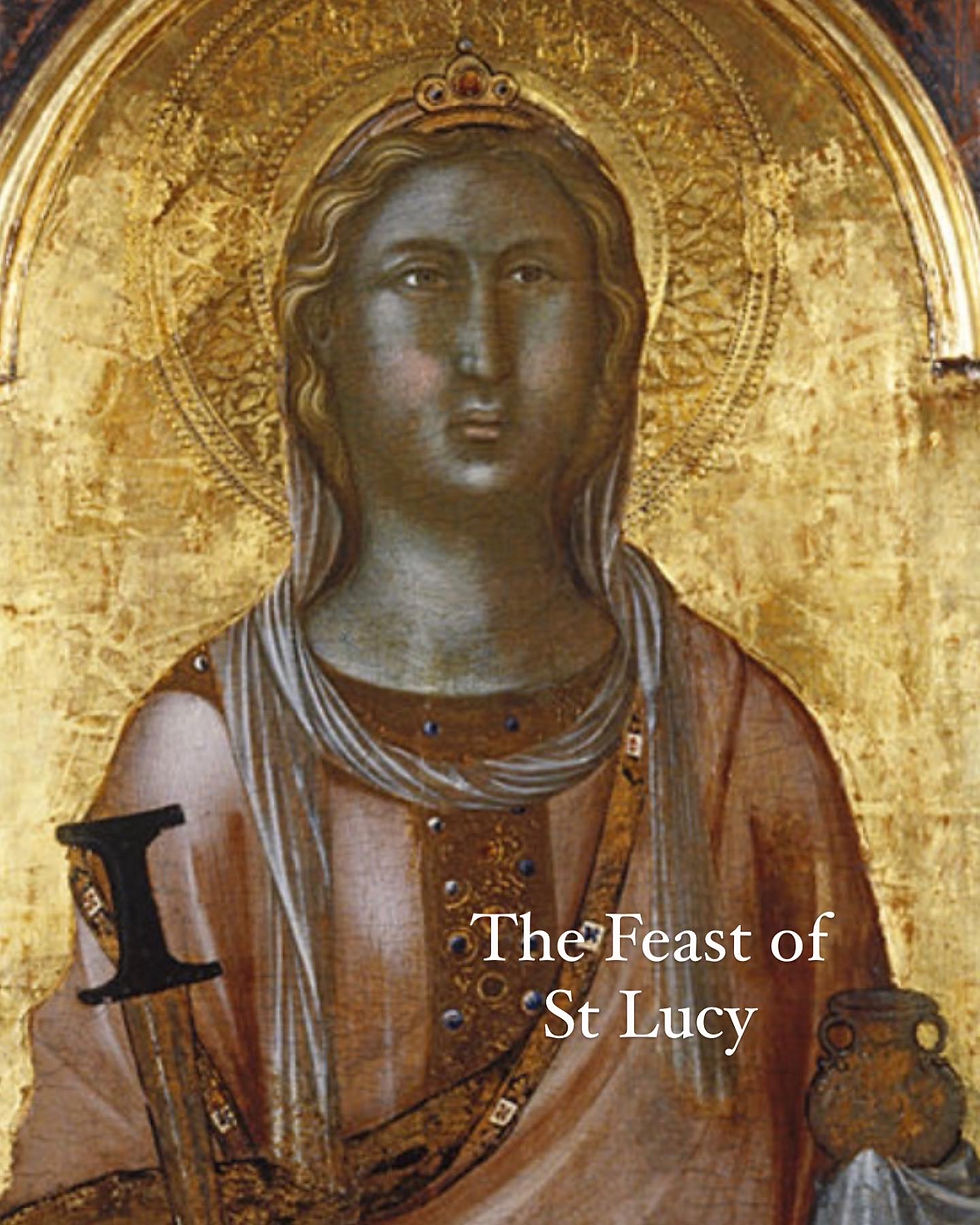
The Feast of St. Lucy invites Christians to remember a young woman whose name literally means light, a woman who stood for Christ in a time of darkness and whose witness continues to shine centuries later. Celebrated on December 13, often in the very heart of winter, her feast reminds us that the Light of Christ still overcomes the darkness.
St. Lucy’s story, rooted in faith, courage, and compassion, has shaped centuries of Christian devotion, especially in Italy and throughout Scandinavia. From early morning processions and candlelit crowns to saffron, scented baking, and wheat-planting traditions, this is a feast that fills both heart and home.
Who Was St. Lucy?
St. Lucy was born into a noble Christian family in Syracuse, Sicily, near the end of the 3rd century. She lived during the fierce persecution of Christians under Emperor Diocletian. Christianity was illegal, and many believers fled underground, taking shelter in the catacombs. Lucy, still a young woman, devoted herself to serving the Church in hiding.
According to tradition, she brought food to the catacombs, needing both hands free to carry bread and supplies. To light her path, she wore a wreath of candles on her head, a striking image of her practical love and sacrificial spirit. This simple act became one of her lasting symbols.
Lucy made a vow of virginity, devoting herself to Christ alone, and planned to give her dowry to the poor. Her mother, worried about Lucy’s future, arranged a marriage to a wealthy pagan. When her fiancé learned of Lucy’s intentions, he betrayed her to the authorities. She was arrested, ordered to offer sacrifice to the emperor, and when she refused, she was martyred.
Though likely no more than 20 or 21 years old, Lucy’s courage and witness made her one of the most beloved early saints of the Church.
Why Is She Associated with Light?
The name Lucia comes from the Latin lux, meaning light. Her feast, falling near the darkest days of winter, became a celebration of the coming light of Christ.
Her martyrdom took place in a time of cultural and spiritual darkness, and yet she remained steadfast. It’s no wonder that over time, Lucy became a symbol of hope, purity, and faithful witness, especially in the long night of winter.
In Christian art and iconography, Lucy is often depicted wearing a crown of candles, holding a palm branch of martyrdom, or even carrying a plate with her eyes (some versions of her story say her eyes were gouged out during her martyrdom and miraculously restored).
How Is St. Lucy’s Day Celebrated?
Processions and Candles
In Sweden and other Nordic countries, St. Lucy’s Day is celebrated with candlelit processions. A young girl is chosen to represent Lucy. She wears:
A white gown (symbolizing purity)
A red sash (symbolizing martyrdom)
A crown of candles on her head
She leads a procession of women and girls, all carrying candles, often singing ancient carols like “Santa Lucia.” The light in the darkness is a moving symbol of the Gospel, and of Lucy’s light-bearing love.
Home Celebrations
In addition to large public processions, St. Lucy’s Day is also a beautiful feast to celebrate at home. Families around the world have adapted this tradition in simple and meaningful ways, bringing the light of Christ into their homes.
Dressing for the Day
Traditionally, one daughter, often the eldest, is chosen to portray St. Lucy. She rises early, dressed in a white gown(symbolizing purity), a red sash (representing martyrdom), and a crown of candles on her head. She carries breakfast, often saffron buns, gingersnaps, or coffee, to the other members of the family.
But in many homes today, especially those with younger children, everyone gets to participate:
All daughters can dress in white and wear red sashes. Some wear simple wreaths on their heads, while others make paper crowns with candles—a fun and symbolic craft.
Little boys traditionally dress as Star Boys (Stjärngossar in Swedish). They wear white robes, cone-shaped hats decorated with gold stars, and often carry a wand with a star at the top, representing the Star of Bethlehem. Their presence in the procession reminds us that all are called to carry the light of Christ.
Whether your family chooses one St. Lucy or invites everyone to participate, the emphasis is on the light of Christ, service, and joyful remembrance. It’s a lovely moment for children to learn the story of St. Lucy, to serve one another with small acts of love, and to participate in the rhythm of the Christian year.
Food Traditions
Saffron Buns (Lussekatter)
The most beloved St. Lucy’s Day food is the saffron bun, or Lussekatter, golden pastries shaped like “S” coils and dotted with raisins. The rich yellow color, scented with saffron, is a reminder of light, joy, and festivity in a season of waiting. The raisins and “S” shape are said to represent Lucy’s eyes.
The recipe for Saffron Buns is included at the end of the post.
Gingersnaps and St. Lucy’s Crown
Other common treats include gingersnaps, coffee cakes, and sweet breads called St. Lucy’s Crown, a braided pastry sometimes served with candles in the center, symbolizing her light.
Wheat and Winter
In Sicily, where Lucy lived, there’s a legend that a famine ended on her feast day when ships full of grain arrived in the harbor. In gratitude, Sicilians eat cuccìa, a dish of boiled wheat berries mixed with ricotta and honey.
In Croatia and Hungary, the feast is marked by planting wheat seeds in small bowls or shallow dishes. If kept moist, the seeds sprout into green shoots by Christmas Day.
Families often place a candle in the center of the growing wheat on Christmas Eve. The green reminds us of new life in Christ; the candle reminds us of the light St. Lucy bore into a world of darkness.
How to Celebrate St. Lucy’s Day at Home
If you’d like to honor St. Lucy’s Day in your own home, here are a few simple ways to begin:
Read and Reflect
Read the story of St. Lucy together as a family. You can find my favorite books on St. Lucy HERE.
Reflect on her courage, her compassion, and her unwavering faith in Christ.
Light the Darkness
Light candles or place extra candlelight around your home in her honor.
Pray for those who need the light of Christ this season.
Bake and Share
Make saffron buns, gingersnaps, or even cuccìa.
Involve children in shaping the dough or delivering treats to friends or neighbors.
Dress and Process
Plant the Seeds
Start the wheat-growing tradition by planting grains in a shallow dish on December 13.
Water it daily and watch it grow. By Christmas, you’ll have a beautiful centerpiece to remind you of St. Lucy.
A Final Word
St. Lucy’s Day is a beautiful reminder that even in seasons of deep darkness, the light of Christ still shines.
Lucy’s witness continues to inspire not because she did something flashy, but because she quietly, faithfully served others, carried the light, and refused to let fear define her. She lived the Gospel with her hands, her heart, and ultimately her life.
On December 13, as candles glow and saffron scents fill the kitchen, may we remember her courage, imitate her compassion, and bear the light of Christ into our homes, communities, and world.
the recipe -

St. Lucy’s Day Saffron Buns
3/4 cup milk
1/2 teaspoon saffron threads (optional)
1 teaspoon plus 1/4 cup granulated sugar
1 1/4-ounce packet active dry yeast
3 1/2 to 4 cups all purpose flour
1/2 teaspoon salt
The seeds from 3 cardamom pods, ground (optional)
1/4 cup unsalted butter, softened
1/4 cup of sour cream
2 large eggs
Raisins
Glaze
1 egg, beaten
In a small pot, heat the milk, saffron, and 1 teaspoon of sugar together until the milk is steaming. Remove from heat and stir to dissolve the sugar. Let cool until about 115 degrees, or warm to the touch but not hot.
Sprinkle the yeast over the warm saffron-infused milk and let sit for 5 to 10 minutes until foamy.
In a mixer, whisk together 3 1/2 cups of the flour, remaining 1/4 cup of sugar, salt, and ground cardamom (if using).
Make a well in the center of the flour and add the yeast, milk, saffron mixture, the eggs, the butter, and the sour cream. Mix the ingredients until well incorporated.
Switch to the dough hook of your mixer if using, otherwise knead by hand. On low speed, start to knead the dough. Slowly add additional flour, a tablespoon at a time, kneading to incorporate after each addition. Do this until the dough is still a little sticky to the touch, but does not completely stick to your hands when you handle it.
Shape the dough into a ball and place it in a large bowl. Cover with plastic wrap. (Note: at this point, you can make ahead and refrigerate overnight if you wish.)
Let it sit in a warm place for 1 to 2 hours, until the dough has doubled in size. (One way to tell that the dough is ready is that you poke your finger in it and it takes quite a bit of time for the indentation left by your finger to go away.)
When the dough has doubled in size, gently press it down and knead it a couple of times. Break off a piece and form it into a ball about 2 inches wide. Roll the ball out into a snake, about 14 inches long. Then curl the ends in opposite directions, forming an “S” with spirals at each end. Place on a lined baking sheet and repeat with the rest of the dough.
Cover with plastic wrap and place in a warm spot until the dough shapes double in size, 30 minutes to an hour.
Preheat oven to 400 degrees. Using a pastry brush, brush some beaten egg over the tops and sides of the uncooked buns. Place raisins in the centers of the “S” spirals.
Place in the oven and bake at 400°F for about 10 to 11 minutes (turning halfway through cooking to ensure even browning), until the buns are golden brown. Remove from oven and let cool for 5 minutes before eating.



Comments