Celebrating the Feast of St. Philip and St. James

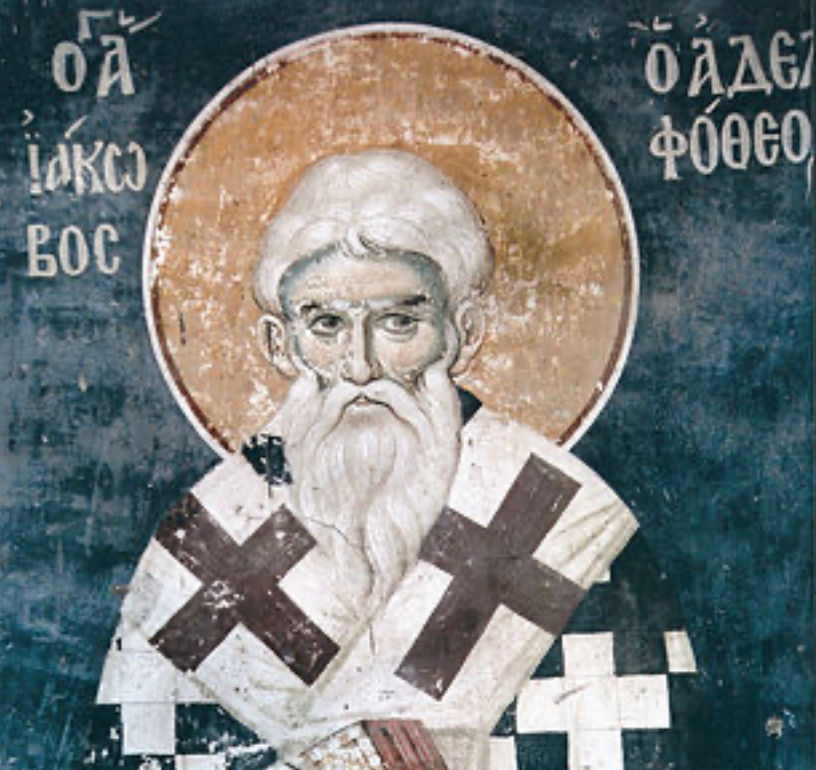
Coming up on May 1st (Anglican) or May 3rd (Catholic), the Feast of St. Philip and St. James invites us into the lives of two of Christ’s chosen apostles, men who followed Him, proclaimed His resurrection, and helped lay the foundation of the Church. Though less well-known than Peter or John, their faithfulness and quiet courage shaped the spread of the Gospel in its earliest days.
This is a beautiful feast to mark in the home, especially in the springtime, as it reminds us that the Church itself is always growing, rooted in Christ and built through the witness of ordinary, faithful people.
Who Were St. Philip and St. James?
St. Philip
Philip’s story begins with a simple but powerful moment: Jesus calls him, and he follows. There’s no hesitation recorded, just obedience. And almost immediately, Philip turns outward. He seeks out Nathanael and tells him, with excitement and conviction, that they have found the One promised in the Scriptures.
When Nathanael doubts that anything good could come from Nazareth, Philip doesn’t argue or try to convince him with clever reasoning. He simply says, “Come and see.”It’s a simple invitation, one that still echoes in the life of the Church.
Later, when a great crowd gathers and there is no food, Jesus turns to Philip and asks where bread can be bought. Philip responds practically, calculating the cost and recognizing the impossibility of feeding so many people. He sees the limits clearly. And yet, he remains present, watching as Jesus transforms what little they have into abundance. Philip’s realism becomes a quiet backdrop for Christ’s miracle.
At another moment, a group of Greeks approaches Philip because they want to see Jesus. Philip doesn’t act alone; he brings Andrew with him, and together they go to Jesus. Even here, we see something of his character, he is a bridge, someone who brings others closer to Christ, even when he’s unsure of the next step.
Perhaps most tenderly, during the Last Supper, Philip asks Jesus to show them the Father. It is a deeply human request, a desire for clarity, for something visible and certain. Jesus responds with both gentleness and truth: “Whoever has seen me has seen the Father.” In that moment, Philip is invited into a deeper understanding of who Christ truly is.
Philip’s journey is one many of us recognize: eager, questioning, practical, and slowly drawn into deeper faith.
St. James (James the Less)
James the Less is named among the Twelve Apostles, chosen by Christ, present among those who followed Him closely, and sent out to proclaim the Gospel. And yet, in the Gospel accounts, he remains mostly in the background. We are not given detailed stories or spoken words from him in the way we are with Peter or John.
And yet, there is something quiet about his witness. He is there, faithful, present, obedient, but not prominent. His calling is not marked by recorded questions or dramatic moments, but by steady inclusion among those closest to Christ. The Church has long remembered him as the son of Alphaeus, and he is often called “the Less,” not as a sign of lesser importance, but perhaps simply to distinguish him from the other apostle named James.
After the resurrection, the apostles were sent out into the world, each carrying the Gospel into different regions. While Scripture does not give us detailed accounts of James the Less’s ministry, tradition holds that he, too, labored faithfully to preach Christ and help establish the early Church, eventually giving his life as a martyr.
Their Ministry and Death
Philip’s Mission
After Pentecost, tradition holds that Philip traveled far from his homeland, bringing the Gospel into regions where Christ was not yet known. In places like modern day Turkey, he preached boldly, calling people away from idols and toward the living God.
His faithfulness came at a cost. As the story is handed down, his preaching led to conflict with local authorities, and he was ultimately martyred, remaining steadfast even unto death. His life reflects a willingness to go wherever Christ leads, even when the path is difficult.
James’ Ministry and Martyrdom
Because Scripture gives us very few details about James the Less beyond naming him among the Twelve, much of what we know of his later ministry comes from tradition rather than the biblical narrative.
After Pentecost, James the Less is remembered as one of the apostles who carried the Gospel outward from Jerusalem, preaching Christ and helping establish the Church in its earliest generations. Various traditions place his ministry in different regions, but they agree in honoring him as a faithful apostolic witness.
His martyrdom is also remembered in different ways across Christian tradition. Some accounts say he was crucified; others associate his death with preaching the Gospel in foreign lands. Because these details are less certain, what we can say with confidence is this: James the Less remained faithful to Christ and was honored by the Church as an apostle and martyr.
Why Are They Celebrated Together?
Philip and James share a feast day because their relics were brought to Rome and honored together in the Church of the Holy Apostles. Over time, the Church kept their memory united in the liturgical calendar.
Bringing the Feast into Your Home
This feast lends itself beautifully to simple, meaningful celebration, especially for families seeking to live the liturgical year with intention.
1. Read and Reflect Together
Read a passage from Philip’s story, his invitation to Nathanael or his question at the Last Supper. Discuss the scene together.
2. Build Something Together
Since the apostles are the “foundation” of the Church:
Build with blocks, stones, or even bake something layered
Talk about what makes a strong foundation
Connect it to habits of faith in your home
3. Practice Invitation
Philip invited others to “come and see.”
Mark the feast by:
Inviting a friend over
Including someone new
Reaching out with intentional kindness
4. Make Bread
Since St. Phillip’s recorded interaction with Jesus involved bread, make this simple and delicious braided bread.
A Gentle Invitation
The Feast of St. Philip and St. James is a quiet one, but perhaps that is its gift.
These are not the loudest or most well-known apostles. And yet, through their steady faith, the Church was built.
They remind us that asking questions, extending invitations, and persevering in small ways, these are the very things God uses to grow His Church.
And that work continues, even now, in our homes.
the recipe -

Braided Loaf Bread
Dough:
3/4 cup warm water (95 to 110 degrees)
One 1/4-ounce packet active dry yeast
3 teaspoons sugar
3 1/2 cups all-purpose flour, plus more for the work surface
1 teaspoon kosher salt
3 tablespoons canola oil
2 large eggs
cooking spray
Topping:
1 large egg
1 teaspoon heavy cream
2 teaspoons sesame seeds
To make the dough: In a small bowl, combine 1/4 cup of the warm water, the yeast, and 1 teaspoon of the sugar. Let stand until foamy, about 5 minutes.
In a stand mixer fitted with the dough hook, combine the flour, remaining 2 teaspoons sugar, and the salt.
With the mixer on low speed, pour in the yeast mixture, the remaining 1/2 cup warm water, the oil, and eggs. Mix on medium speed for 5 minutes, until the dough forms a ball and pulls away from the sides.
Spray a large bowl lightly with cooking spray and place the dough in the bowl. Cover with plastic wrap and let the dough rise in a warm spot until doubled in size, about 1 hour.
Punch down the dough to release the air. Turn out the dough onto a lightly floured surface. Divide the dough into 3 equal portions. Roll each into a ball and then into a 15-inch-long rope.
Spray a baking sheet with cooking spray. Place the 3 ropes parallel to one another on the pan. Starting at one end of the dough ropes, carefully braid them. Pinch the ends to seal and tuck the ends underneath the braid so that only the braid shows.
Lightly cover the pan with plastic wrap and let rise until pillowy, about 45 minutes.
Meanwhile, preheat the oven to 375 degrees.
To prepare the topping: In a small bowl, whisk together the egg and cream. Gently brush it over the dough.
Sprinkle the dough with the sesame seeds.
Bake until golden brown, about 28 minutes. Let the loaf cool for about 10 minutes, then transfer to a wire rack to cool completely, about 40 minutes, before serving.
Recipe from www.magnolia.com


Comments