The Real Santa Claus - Celebrating St. Nicholas' Day
When I was growing up, I had no idea who St. Nicholas was. I was raised in a Christian home, and we even attended a liturgical church, but the name St. Nicholas? It was never mentioned.
Now, Santa Claus? The man in the red suit with the white beard? I knew all about him. He was the one who watched you while you were sleeping (which, honestly, felt more creepy than magical), who delivered presents on Christmas Eve, and who flew in a sleigh pulled by reindeer. You had to leave cookies out for him, and he somehow knew if you had been “naughty or nice.”
But none of it ever made much sense to me. I’d run into “Santa” at the gas station, driving a beat-up old Chevy, not a sleigh, and certainly no reindeer in sight. He reminded me of the Easter Bunny or the Tooth Fairy, strange characters that appeared in cheap costumes outside Walmart or inside the mall. And every year, for some reason I still don’t quite understand, you were supposed to dress up, sit in his lap, and have your picture taken.
So when I became a mom, I wanted no part of the Santa Claus tradition. My husband and I planned to simply tell our kids he wasn’t real and move on. But then I discovered something I hadn’t known: that behind the red suit and the flying sleigh, there was a real person. A real saint. A real story worth telling—St. Nicholas.
The Real Saint Nick
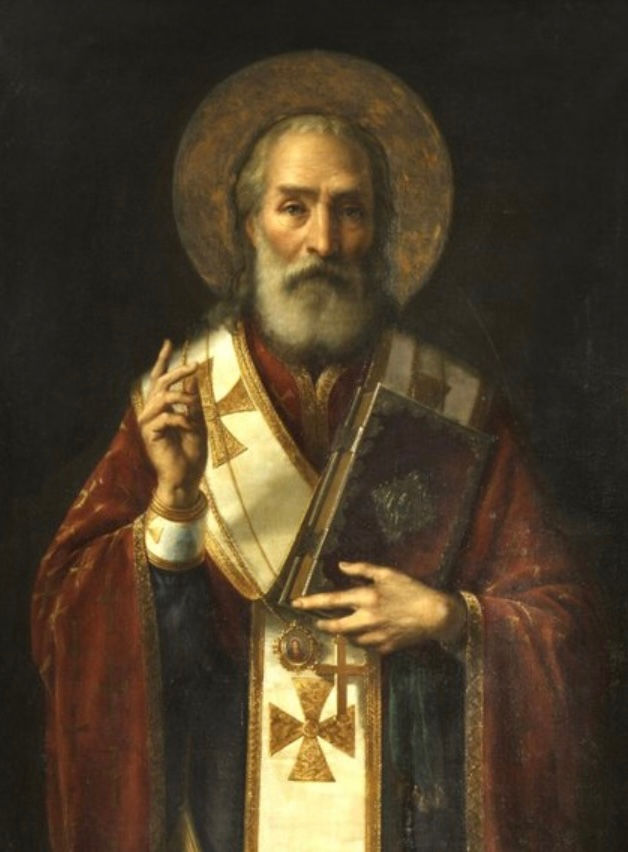
St. Nicholas was born into a wealthy family in what is now modern-day Turkey. From a young age, he was deeply committed to following Jesus. After the death of his parents, he inherited a significant fortune, but instead of keeping it, he gave it away to serve those in need. He was known for his generosity, his faith, and his deep love for the Gospel.
Nicholas was eventually made Bishop of Myra in the 4th century and became an important leader in the Church. In fact, he was present at the Council of Nicaea, the very gathering that gave us the Nicene Creed we still recite each Sunday in worship. Nicholas was especially concerned with the poor and with children, and over time, many stories were told of his compassion and kindness.
Stockings and Secret Giving
The most well-known story associated with St. Nicholas is the one that inspired the tradition of stockings. According to the legend, there was a poor man who had three daughters. With no money to provide a dowry, he feared they would never be able to marry and was deeply distressed about what would happen to them after his death.
St. Nicholas heard of the family’s need and longed to help. But he also knew the father was proud and would never accept a public act of charity. So Nicholas decided to give in secret. Late at night, he crept into the house and quietly placed a bag of gold coins for each daughter, one in each stocking that had been hung by the fire to dry.
When the family awoke the next morning, they found the gold, and the daughters were able to marry. That act of quiet generosity, given without recognition or applause, became the foundation of a tradition that still lives on: children placing out stockings or shoes on December 6, eagerly awaiting a small gift in memory of St. Nicholas, the man who gave everything to follow Christ.
How We Celebrate St. Nicholas Day
Around the world, Christians still honor St. Nicholas and celebrate his feast day on December 6. He’s often shown dressed in a bishop’s robes, wearing a cope and miter, and holding a crozier. When people dress up as St. Nicholas, they dress like a bishop, not like a North Pole cartoon character. When cookies are made in his honor, they’re shaped like bishops, complete with staff and miters, not round with red frosting hats.
Our family chose to celebrate his day in a way that felt faithful and rooted in history.
On the eve of St. Nicholas Day, we baked Speculatius, a crisp, spiced cookie from western Germany that’s full of cinnamon and buttery goodness. We’d enjoy the cookies together before bedtime and read a simple, sweet board book that told the real story of St. Nicholas.
Then, after the children were tucked in bed, my husband and I would fill their stockings with little bags of chocolate coins wrapped in gold foil, a bright orange, and a few fun pieces of chocolate.
In the morning, our children would race to their stockings with excitement, delighted by the little treasures, even if they never ate the orange. Before heading off to school, we would read the story of St. Nicholas again and pray together, thanking God for a man who gave up wealth, comfort, and prestige to follow Jesus with his whole heart. A man who cared deeply for the poor and who gave to others without expecting anything in return.
Note - many people celebrate the day by filling their children’s shoes with goodies rather than stockings. The children place a pair of their shoes out before they go to bed, and the parents fill their little shoes with treats. Either way is so fun!
Why It Matters
Looking back now, I am so thankful we discovered the story of St. Nicholas, and even more thankful that we chose to celebrate his feast day as a family.
St. Nicholas helps us teach our children what generosity really looks like. He reminds us that our faith isn’t about being seen or applauded, but about quiet faithfulness and kindness. He reminds us that the true saints of the Church never seek to be the center of the story; they always point us back to Jesus.
And I believe that’s exactly what St. Nicholas would want today. Not to be turned into a commercial icon or a holiday mascot, but to gently redirect our hearts away from distraction and toward Christ.

How to Make Speculatius
If you’d like to bake these delicious cookies for your own St. Nicholas celebration, here’s our family recipe:
Ingredients:
1 cup butter
1 cup shortening
2 cups brown sugar
½ cup sour cream
½ tsp baking soda
4 tsp cinnamon
½ tsp nutmeg
½ tsp cloves
4½ cups sifted flour
Directions:
Cream the butter, shortening, and brown sugar together.
Add sour cream alternately with sifted dry ingredients.
Knead the dough, shape it into rolls, wrap in plastic wrap, and chill for a few hours.
Roll the dough very thin and cut into shapes—traditional bishop shapes if you can!
Bake at 350°F for 10–15 minutes until golden and crisp.
Serve with warm cider or tea, read the story of St. Nicholas, and let the simplicity of the tradition anchor your Advent season in grace.
This December 6, consider reclaiming the true story of St. Nicholas in your home. Let the stockings and sweets tell a better story, one of hidden giving, deep faith, and a life shaped entirely by the love of Christ.
Let’s tell our children the real story. Let’s point them back to Jesus.


Comments